
Volume 6, Issue 1: Who Are We?
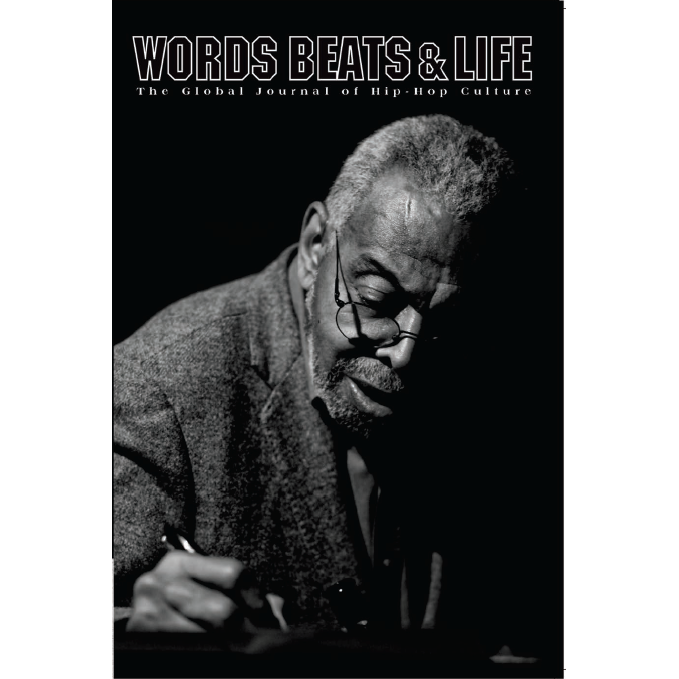
“Our progress, our identity, and our legacy, are inextricably linked in the field of hip-hop studies and the expression of hip-hop culture. In other words, if you are a hip-hop inspired poet, painter, sculptor, photographer, writer, scholar, or a fan, our success is tied to yours. You are the creators, the field, and the culture. We are your mirror. We are a reflection of you and we are working to be the clearest mirror you have ever looked into”
-Jason Nichols, PhD
Identity, Legacy, and the Future of Hip-Hop Studies
Volume 6, Issue 1 of the Global Journal of Hip-Hop Culture examines how hip-hop shapes identity, knowledge and cultural memory across communities and institutions. Through essays, interviews, poetry and visual art, contributors explore hip-hop not only as a subject of study but as a method of learning, teaching and producing knowledge rooted in community practice.
Volume 6 examines hip-hop as a global knowledge system shaping culture, scholarship and community across the Black diaspora. While this issue looks inward at identity, pedagogy and the institutional future of hip-hop studies, its companion issue explores Brazilian hip-hop as a powerful site of global diasporic resistance and cultural production.
Preview Vol 6 Issue 1:
Flip through the pages of “Who We Are” in this free preview.
Types of Work Featured
1. Institutionalization of Hip-Hop Studies
Issue 1 turns inward, interrogating what happens when hip-hop becomes curriculum, minor, archive, and museum subject. Contributors ask who benefits, who is erased, and what accountability looks like when hip-hop enters formal institutions.
2. Hip-Hop as Knowledge System and Pedagogy
Essays frame DJing, sampling, and cipher practices as epistemologies, positioning hip-hop not just as content to be studied but as a method of learning, teaching, and meaning-making.
3. Identity, Citizenship, and Belonging
Contributors examine how hip-hop shapes identity across race, migration, religion, and nation, including Arab, Muslim, Mexican, Black, and transnational experiences.
4. Oral History and Movement Memory
Long-form interviews function as intellectual history, preserving lineage while mapping future directions for hip-hop studies.
5. Poetry and Visual Art as Legacy Work
Poetry and visual art address memory, loss, tribute, and responsibility, explicitly linking hip-hop to earlier Black Arts and freedom movements.
Important Contributors
Jason Nichols, PhD – Editor-in-Chief. Shapes the issue’s reflective and future-oriented framing around identity, stewardship, and institutional power.
Kari Quiballo – Author of “Say What? You Can Minor in Hip-Hop?”, a critique of the politics surrounding hip-hop’s entry into higher education.
Zachary Kaiser – Introduces DJ epistemology as a theory of knowledge production.
Jelani Favors, PhD – Interviews 9th Wonder, bridging academic discourse and practitioner pedagogy.
Pages Matam – Featured poet whose work interrogates origins, misogyny, and cultural accountability.
Daniel Callahan – Featured visual artist whose MassQ series explores identity, ritual, and refusal through embodied art.
Jared Ball, PhD – Contributor and interviewer engaging questions of sound, space, and Black-Brown solidarity.
Laylah Amatullah Barrayn – Photographer and interview subject documenting Black women writers as archival practice.
Lara Dotson-Renta – Examines hip-hop diplomacy among Muslim and Arab artists resisting terrorism narratives.
Jeihhco Caminante – Community organizer from Medellín, Colombia, illustrating hip-hop’s role in post-conflict rebuilding.
Why This Issue Matters
Volume 6, Issue 1 explores how hip-hop functions as both cultural practice and a system of knowledge. Contributors examine how DJing, sampling, the cipher and other hip-hop practices operate as ways of producing and sharing knowledge, shaping how communities create, teach and preserve cultural memory.
Through scholarship, interviews, poetry and visual art, the issue reflects on identity, lineage and responsibility within hip-hop culture. Together these works ask how hip-hop’s legacy can be studied, taught and carried forward without losing the community roots that made the culture possible.
Significance of Volume 6 as a Whole
Volume 6 positions the Words Beats & Life Global Journal of Hip-Hop Culture at its most globally expansive and institutionally self-aware moment.
Issue 1 reflects inward, examining identity, pedagogy, and the institutional future of hip-hop studies.
Issue 2 looks outward, highlighting Brazilian hip-hop as a powerful site of Black diasporic culture, resistance, and cultural production.
Together, Volume 6 frames hip-hop as:
A global diasporic movement
A system of knowledge and pedagogy
A cultural inheritance that must be stewarded, not merely celebrated