
Volume 5, Issue 2: Untitled
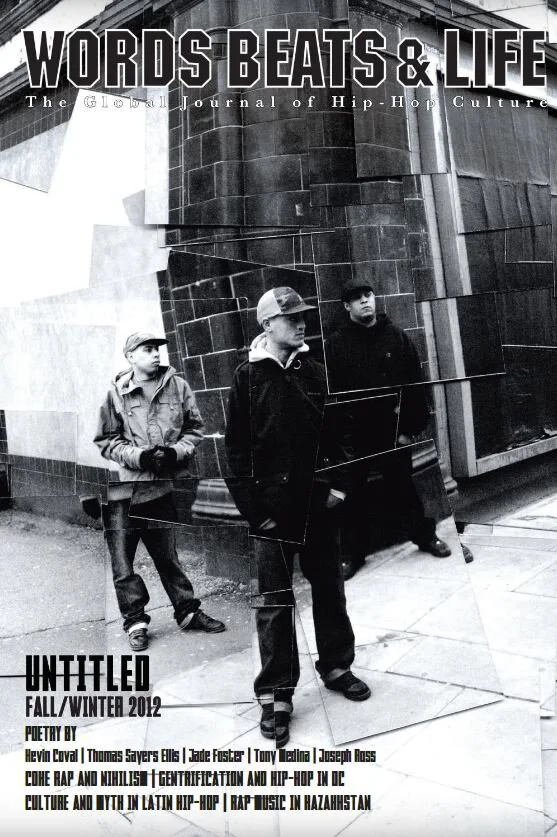
Volume 5, Issue 2 examines hip-hop as both a cultural movement and a method of learning. Contributors explore how hip-hop shapes education, identity, and cultural exchange across local and global communities. Through scholarship, visual documentation, and reflective essays, the issue highlights how hip-hop operates as a shared language through which knowledge, creativity, and cultural belonging are produced and transmitted.
Publisher: Words Beats & Life, Inc.
Publishing Date: 2013
Preview Inside the Issue:
Flip through the pages of Volume 5, Issue 1.
Work Featured:
1. Hip Hop Pedagogy and Cultural Transmission
This issue foregrounds hip hop as an educational methodology, engaging:
Classroom applications
Informal learning
Intergenerational transmission
Hip hop as curriculum rather than content
Several essays explicitly frame hip hop as a teaching technology.
2. Global Hip Hop and Transnational Exchange
Contributions document:
Hip hop movements outside the United States
Diasporic exchange
Cultural translation
Global youth resistance
Hip hop is treated as a shared global language, not an American export.
3. Identity, Citizenship, and Cultural Belonging
Essays interrogate:
National identity
Race and migration
Cultural ownership
Belonging within and beyond the nation state
These works position hip hop as a site where citizenship is negotiated.
4. Visual Culture and Documentation
Photography, illustration, and design continue as primary evidence, documenting lived hip hop culture rather than stylized representation.
5. Reviews, Reflections, and Forward Looking Essays
Book reviews and reflective essays assess the state of hip hop studies, education, and activism, signaling future directions for the field.
Contributors of Note
Jason Nichols, PhD: Editor in Chief and contributor, shaping the issue’s pedagogical and political framing. His work reinforces the journal’s role in institutionalizing hip hop studies.
Mark Anthony Neal: Returns with analysis connecting popular culture, education, and public discourse, reinforcing continuity across volumes.
Hank Willis Thomas: Featured interview subject. His conversation situates hip hop adjacent to contemporary art, branding, and institutional critique.
Corey Thompson: Contributor documenting urban murals and visual culture, reinforcing hip hop’s relationship to public space.
Multiple Educators and Cultural Workers: This issue intentionally centers practitioner voices, reflecting hip hop’s pedagogical future rather than only its academic past.
Significance of Volume 5, Issue 2
Volume 5 Issue 2 positions hip hop at the intersection of education, global culture, and future making, emphasizing responsibility, stewardship, and intentional transmission.
Why This Issue Matters
Volume 5, Issue 2 explores how hip-hop functions as a system of cultural knowledge and educational practice. Essays and creative work highlight how hip-hop shapes teaching, identity formation, and community storytelling while connecting artists and educators across global contexts.
By examining pedagogy, cultural exchange, and visual documentation, the issue positions hip-hop as both a creative tradition and a powerful tool for learning, cultural dialogue, and social change.
Volume 5 Editorial Arc
Issue 1 expands hip hop into body, spirit, and visual inscription
Issue 2 centers pedagogy, global exchange, and cultural futures
Together, Volume 5 reflects the journal’s most mature phase: hip hop as a knowledge system, educational practice, and global cultural infrastructure.