
Volume 8, Issue 2: Rhymes & Resistance
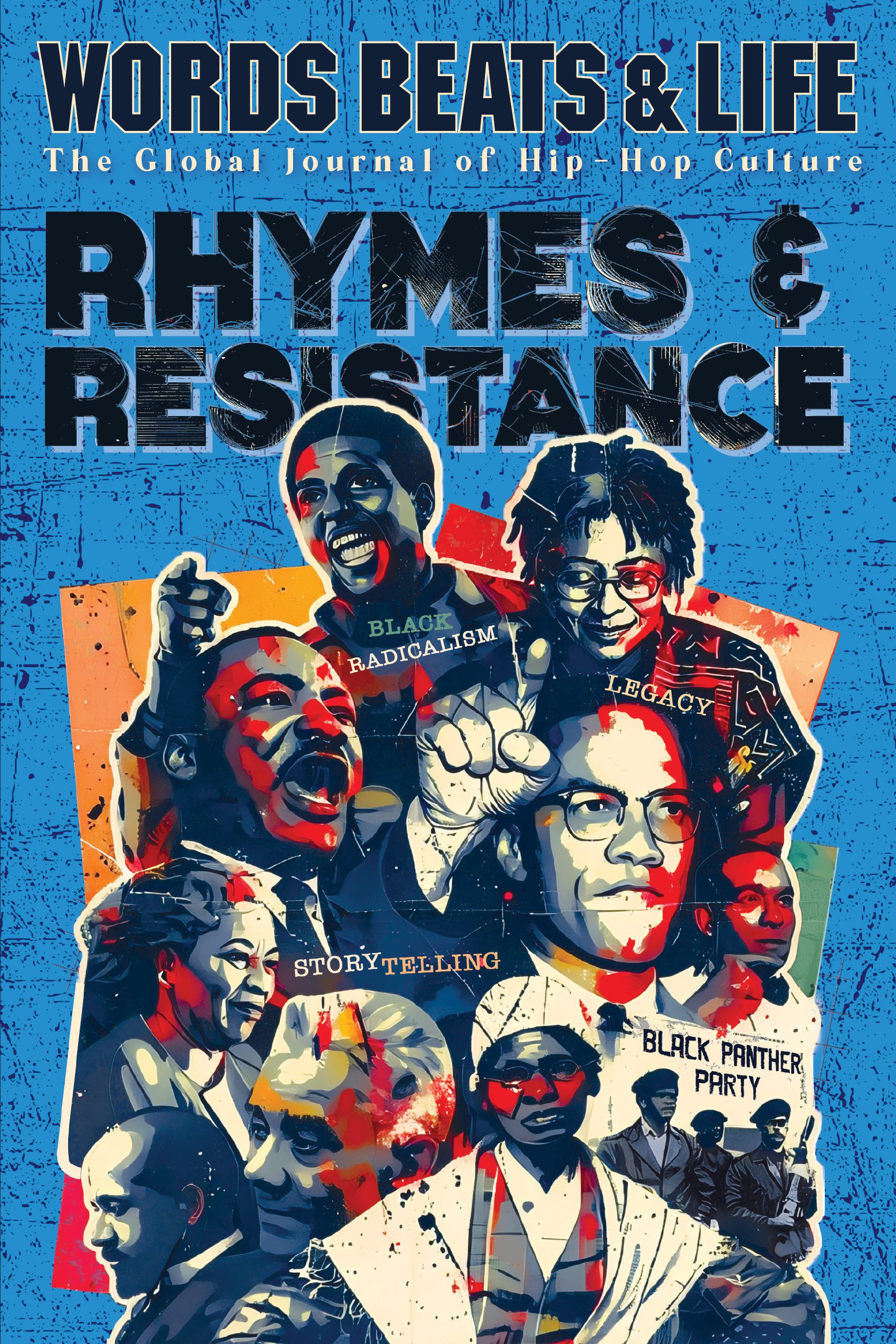
Explore the latest issue of Words Beats & Life: Global Journal of Hip-Hop Culture, a peer-reviewed journal bringing together scholarship, cultural criticism, interviews and creative perspectives from across hip-hop culture.
Volume 8, Issue 2 examines hip-hop as a force for resistance, connection, education and cultural expression, with work exploring the Black Radical Tradition and the Last Poets, rap and the politics of the “ghetto,” hip-hop’s global reach, Pan-African imagination, women in the Hip-Hop South, Chicago’s “Rap-brarian” Roy Kinsey, sneaker culture, music technology, education and more.
Volume 8, Issue 2 explores hip-hop as a living archive of struggle, creativity and cultural resistance, tracing the ways the culture reclaims space, history and identity across generations and geographies. Moving from the Black Radical Tradition and the political foundations of hip-hop to contemporary questions of race, technology, education, labor and global cultural exchange, the issue examines hip-hop as both an artistic practice and a tool for understanding and reshaping the world.
Editor-in-chief Msia Kibona Clark, in her opening letter, frames the issue around hip-hop’s enduring ability to connect communities, challenge dominant narratives and create new possibilities. Across scholarship, interviews, cultural criticism and personal narrative, contributors move from the streets of Johannesburg to the libraries of Chicago, from the legacy of the Last Poets to the technological possibilities of drum machines, revealing a culture continually responding to — and transforming — the conditions around it.
The issue positions hip-hop as:
A living archive connecting Black radical thought, history and contemporary cultural expression
A global practice capable of building connections across communities and diasporas
A vehicle for challenging racialized narratives and structures of power
A catalyst for education, community building and personal transformation
A site where technology, fashion, language and artistic innovation continually take on new meaning
Free Preview:
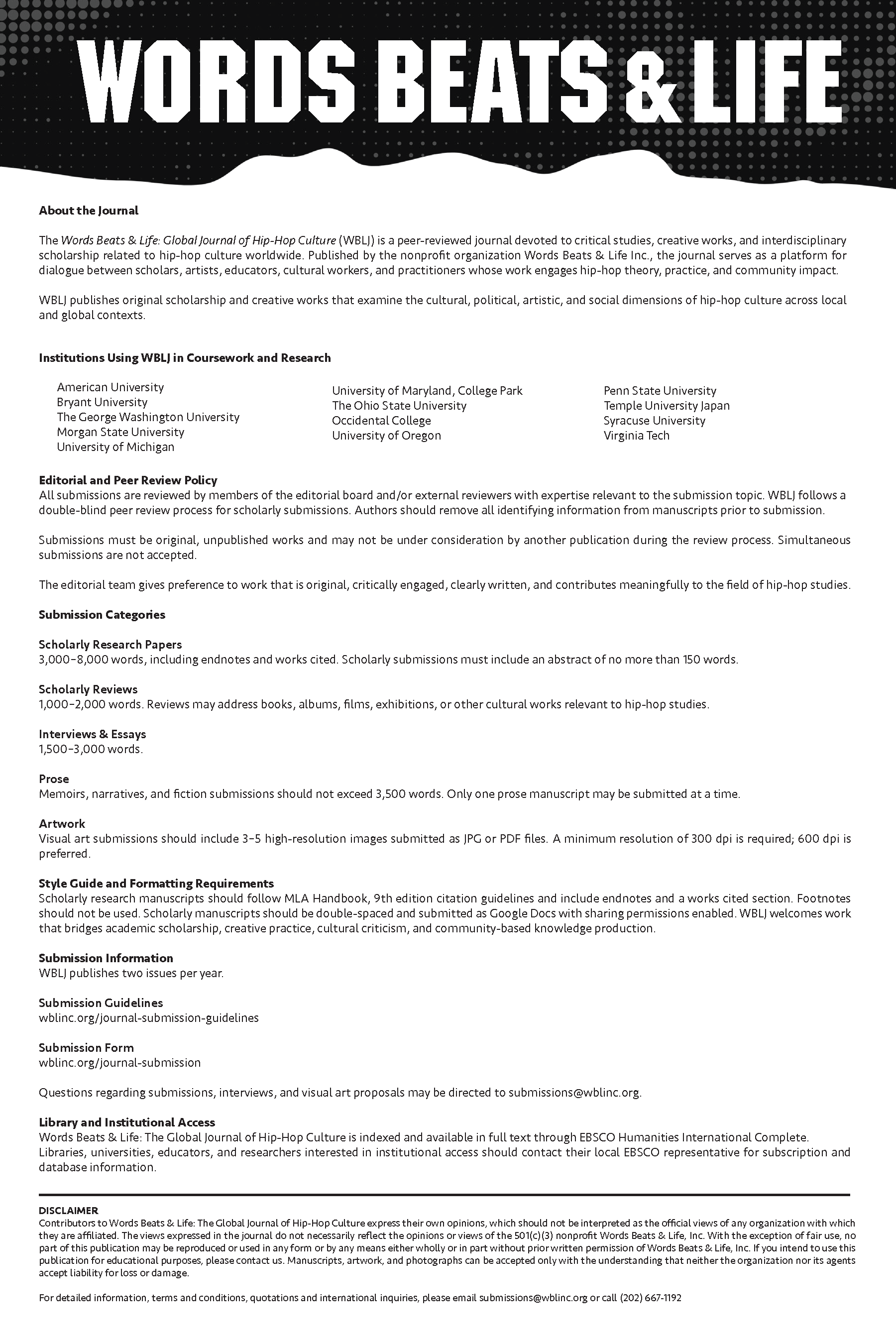
Not ready to purchase the full issue? Preview select pages from Volume 8, Issue 2 of Words Beats & Life: Global Journal of Hip-Hop Culture and get a look inside the latest scholarship, interviews, cultural criticism and stories exploring hip-hop culture around the world.
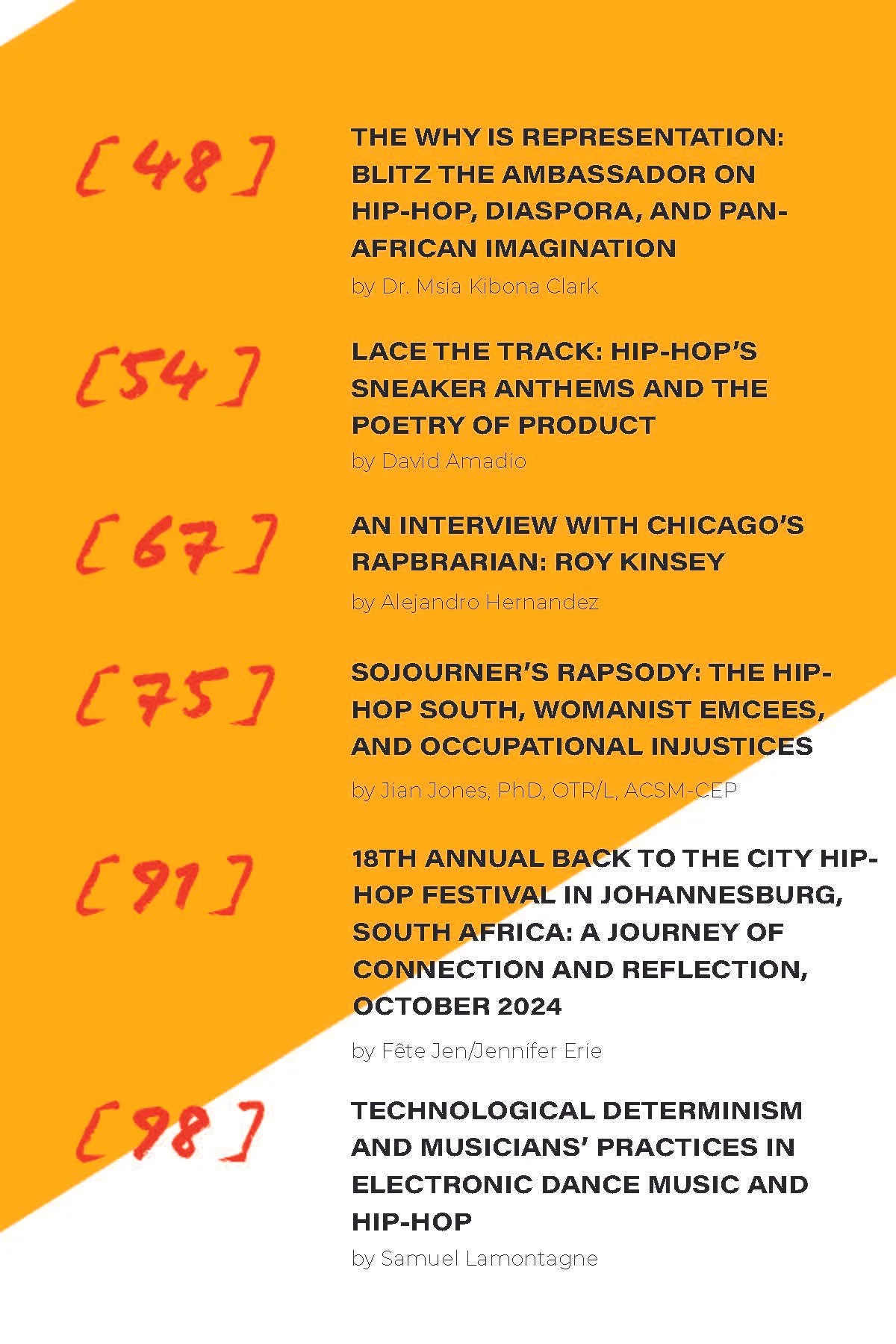
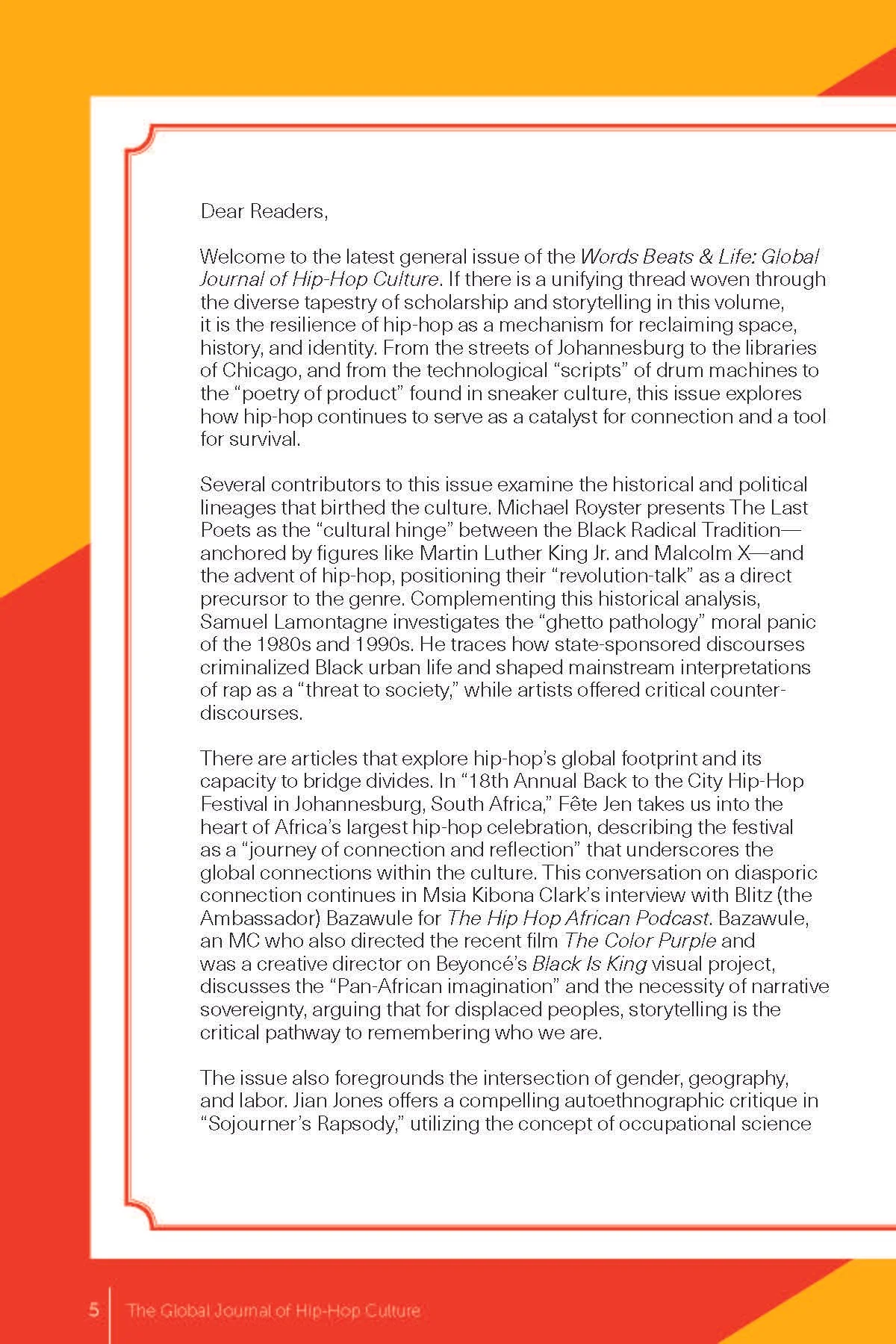
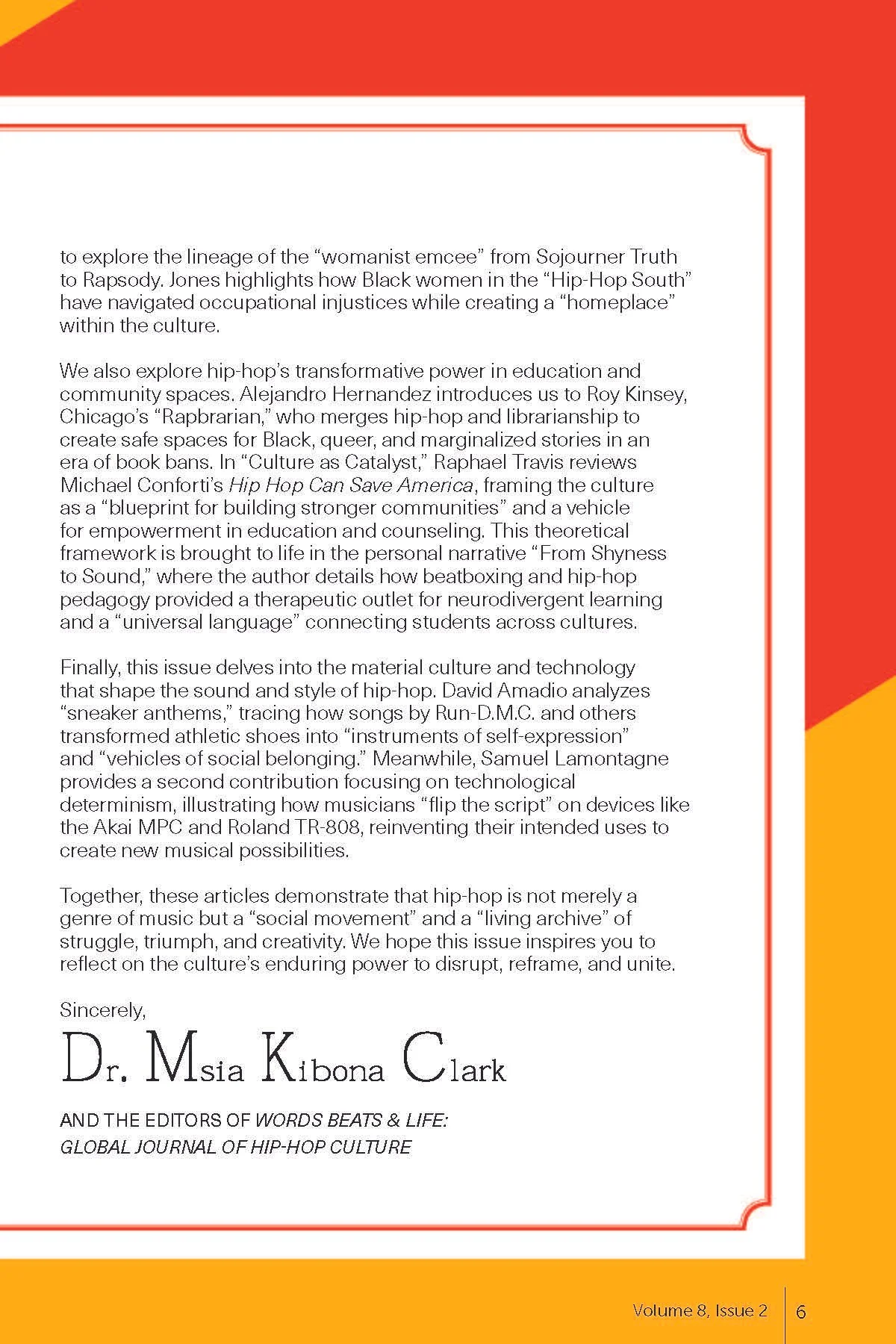
Explore What’s Inside Volume 8 Issue 02:
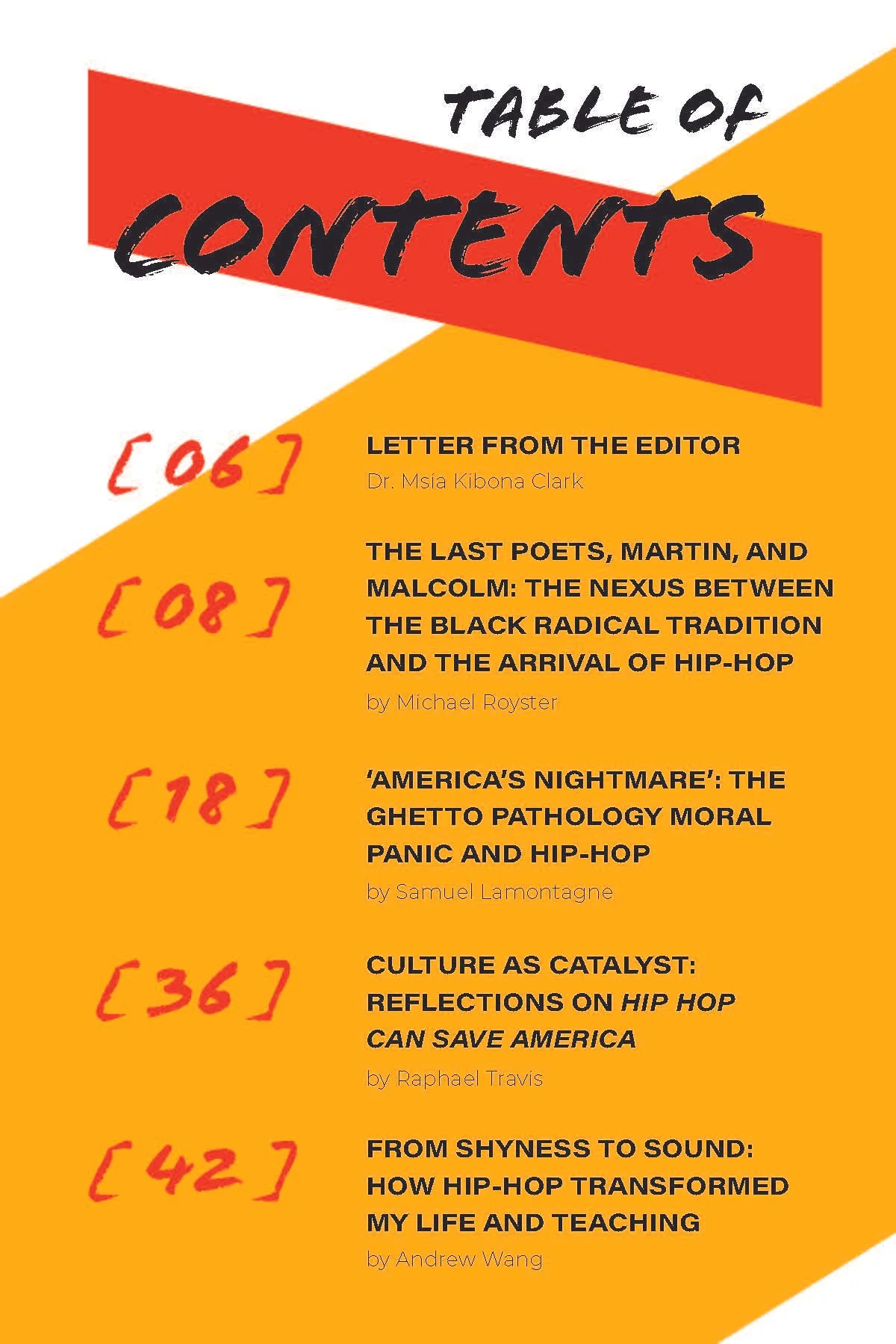
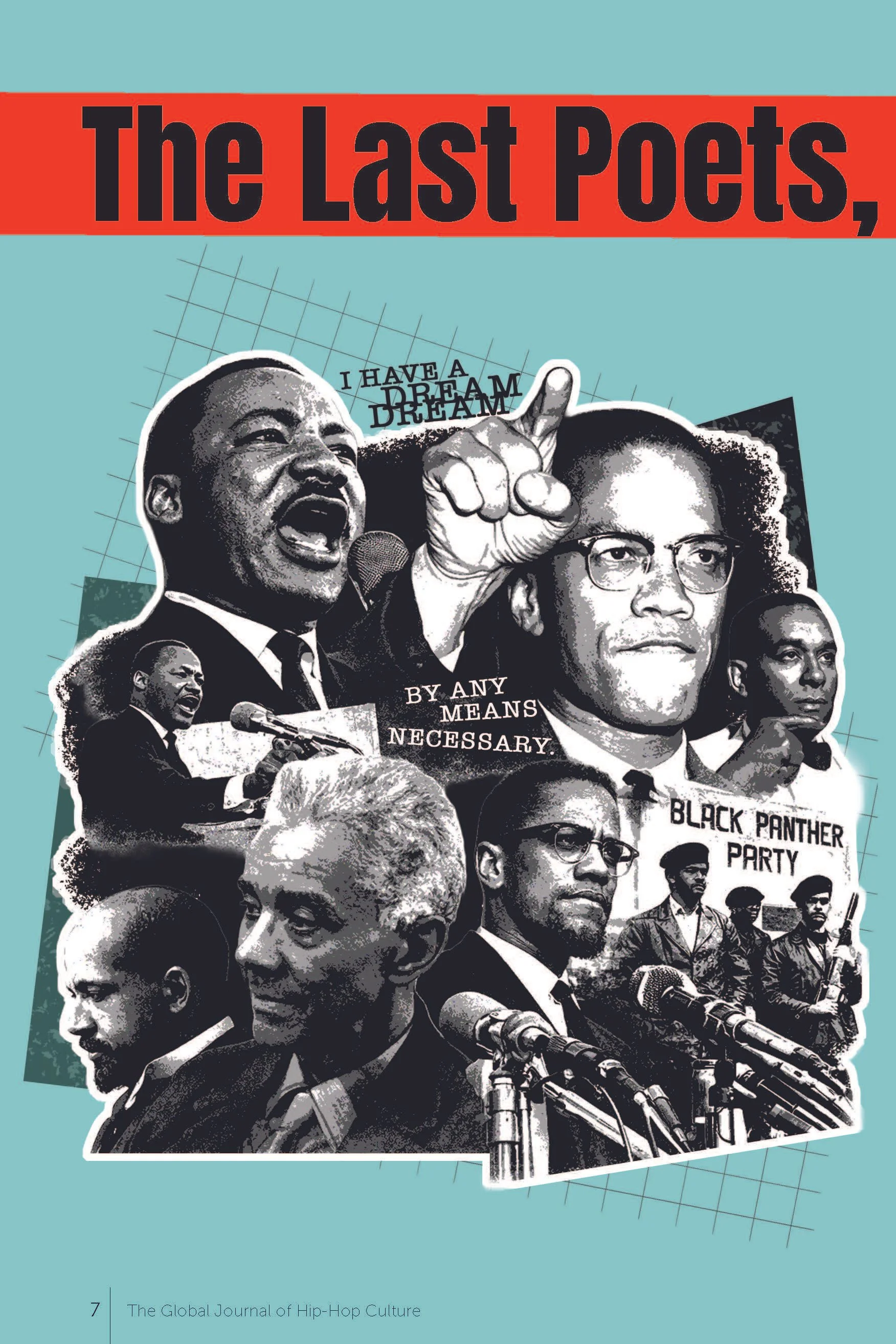
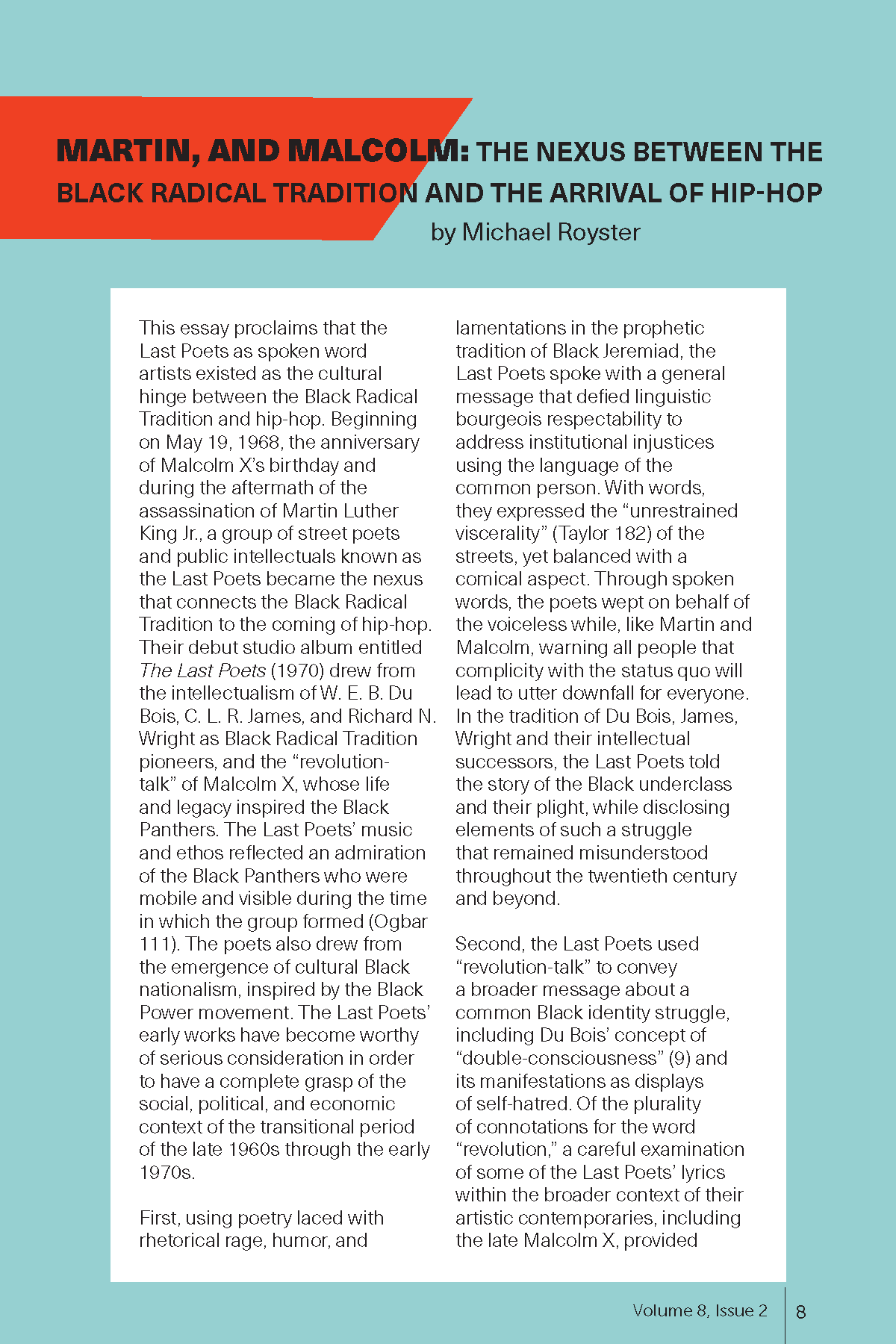
The Last Poets, Martin Luther King Jr. and Malcolm X — Michael Royster examines the Last Poets as a cultural hinge between the Black Radical Tradition and the arrival of hip-hop, tracing connections among Black radical thought, spoken word, political resistance and the foundations of emceeing.
Rap, race and the politics of the “ghetto” — Samuel Lamontagne interrogates the “ghetto pathology” discourse and moral panics surrounding rap in the 1980s and 1990s, examining their relationship to systemic anti-Blackness, criminalization and racialized constructions of space.
Hip-hop as a catalyst for stronger communities — Raphael Travis reflects on Hip Hop Can Save America and its framing of hip-hop as a resource for education, counseling, empowerment and community building.
Hip-hop, education and personal transformation — Andrew Wang reflects on how beatboxing and hip-hop pedagogy helped transform his life and teaching, creating new ways to connect with students across cultures.
Pan-African imagination and narrative sovereignty — Editor-in-chief Msia Kibona Clark speaks with Blitz the Ambassador about hip-hop, diaspora, storytelling and the importance of African people retaining the power to tell their own stories.
Hip-hop on the African continent — Fête Jen takes readers inside the 18th annual Back to the City Hip-Hop Festival in Johannesburg, South Africa, exploring the festival as a space for cultural exchange, connection and reflection.
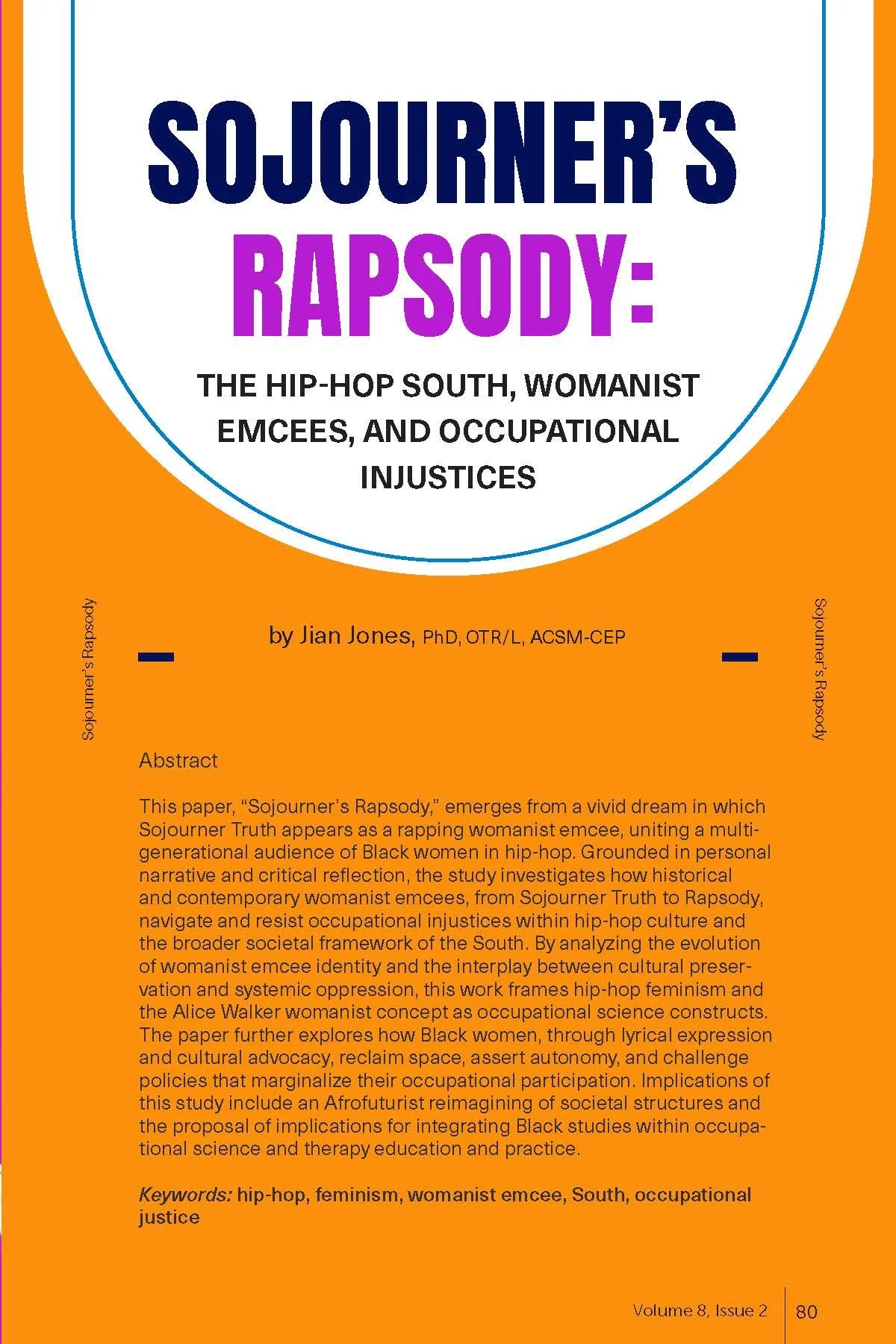
Black women, the Hip-Hop South and occupational justice — Jian Jones traces a lineage from Sojourner Truth to Rapsody while examining the ways Black women create space within hip-hop amid intersecting occupational injustices.
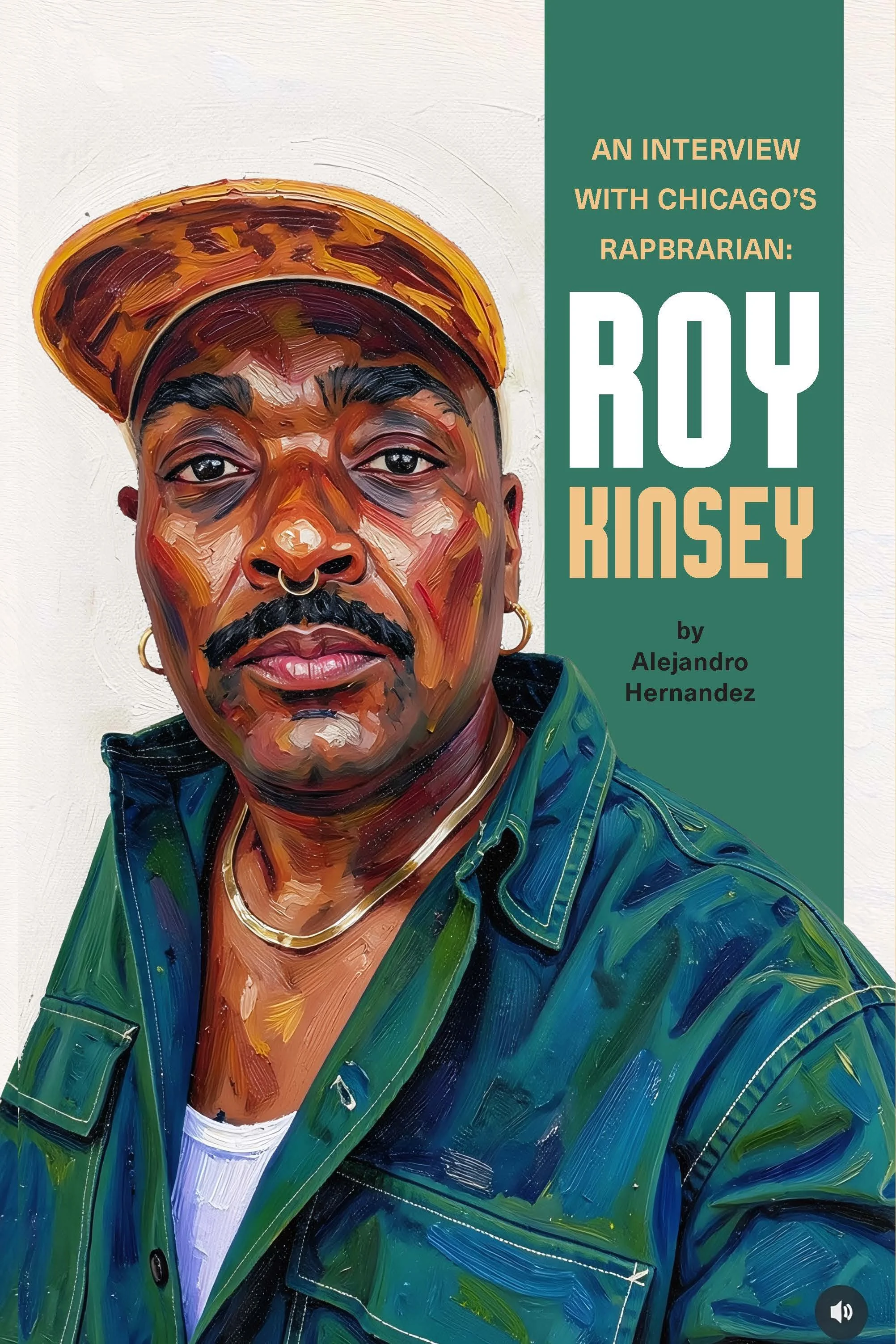
Hip-hop and librarianship — Alejandro Hernandez introduces Chicago artist and “Rapbrarian” Roy Kinsey, whose work brings hip-hop and librarianship together to create space for Black, queer and marginalized stories.
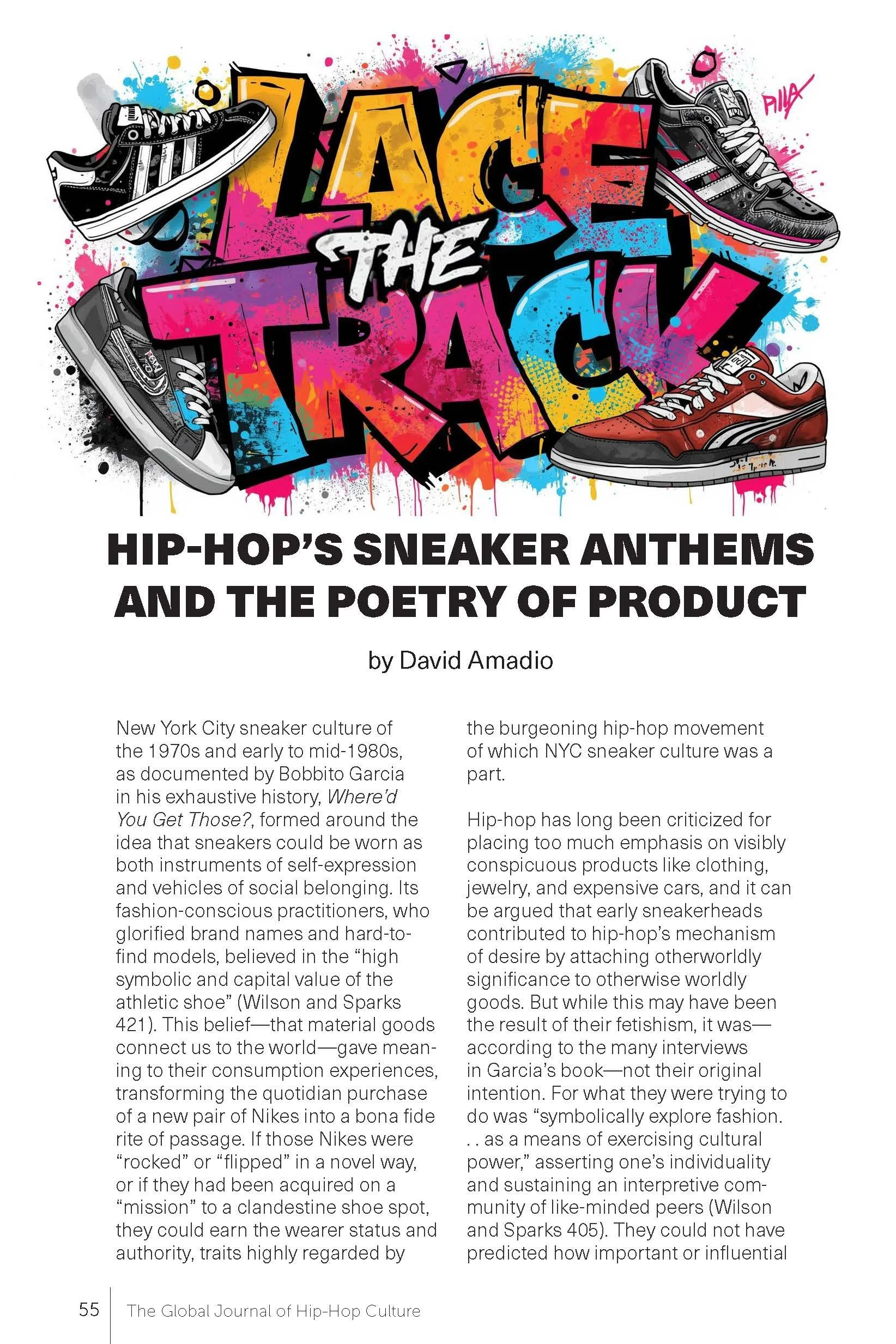
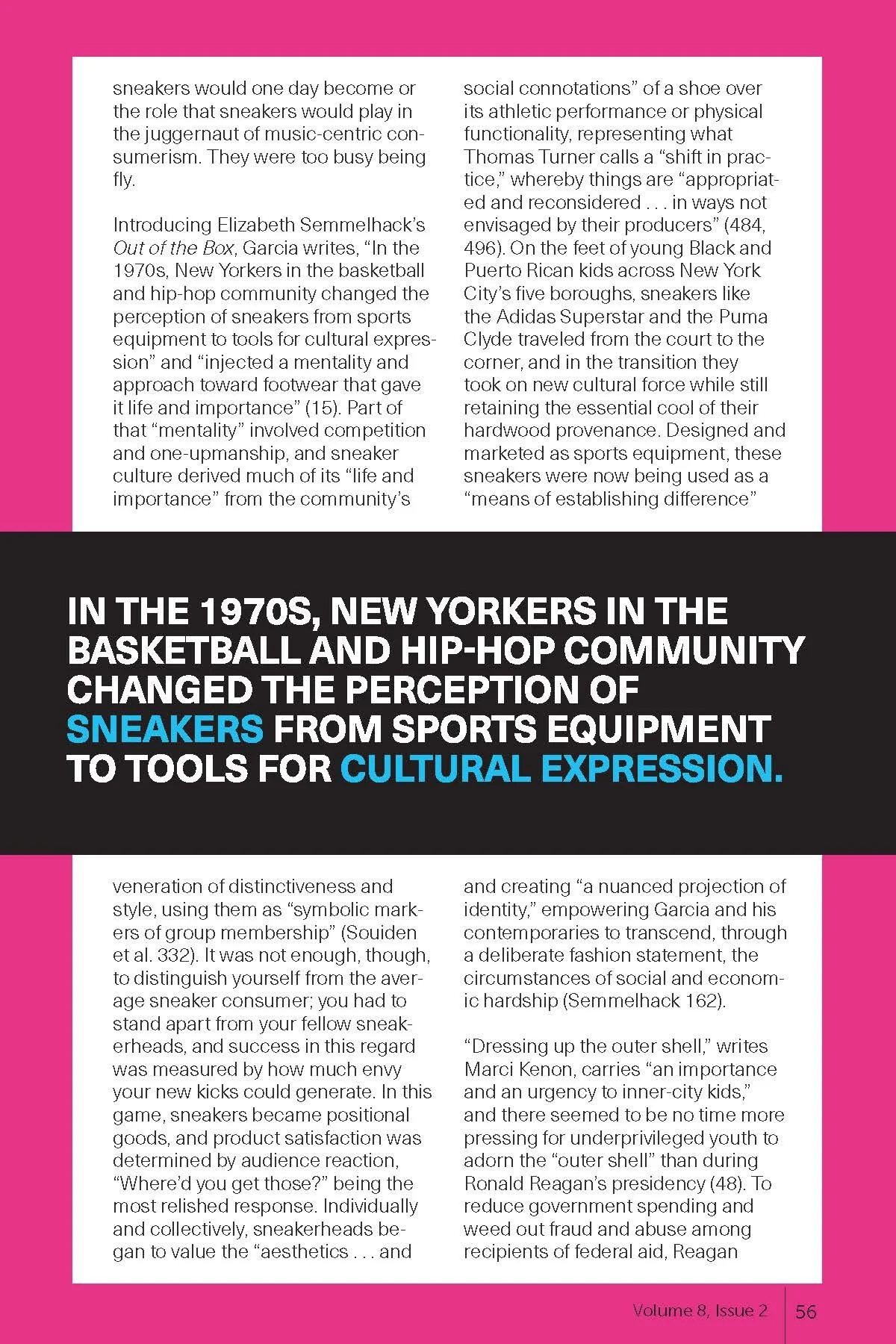
Sneakers as hip-hop text — David Amadio explores hip-hop’s sneaker anthems and the transformation of athletic shoes into forms of self-expression, cultural identity and social belonging.
Technology and musical innovation — Samuel Lamontagne examines technological determinism in electronic dance music and hip-hop, exploring how artists repurpose technologies such as the Akai MPC and Roland TR-808 beyond their intended uses to create new musical possibilities.
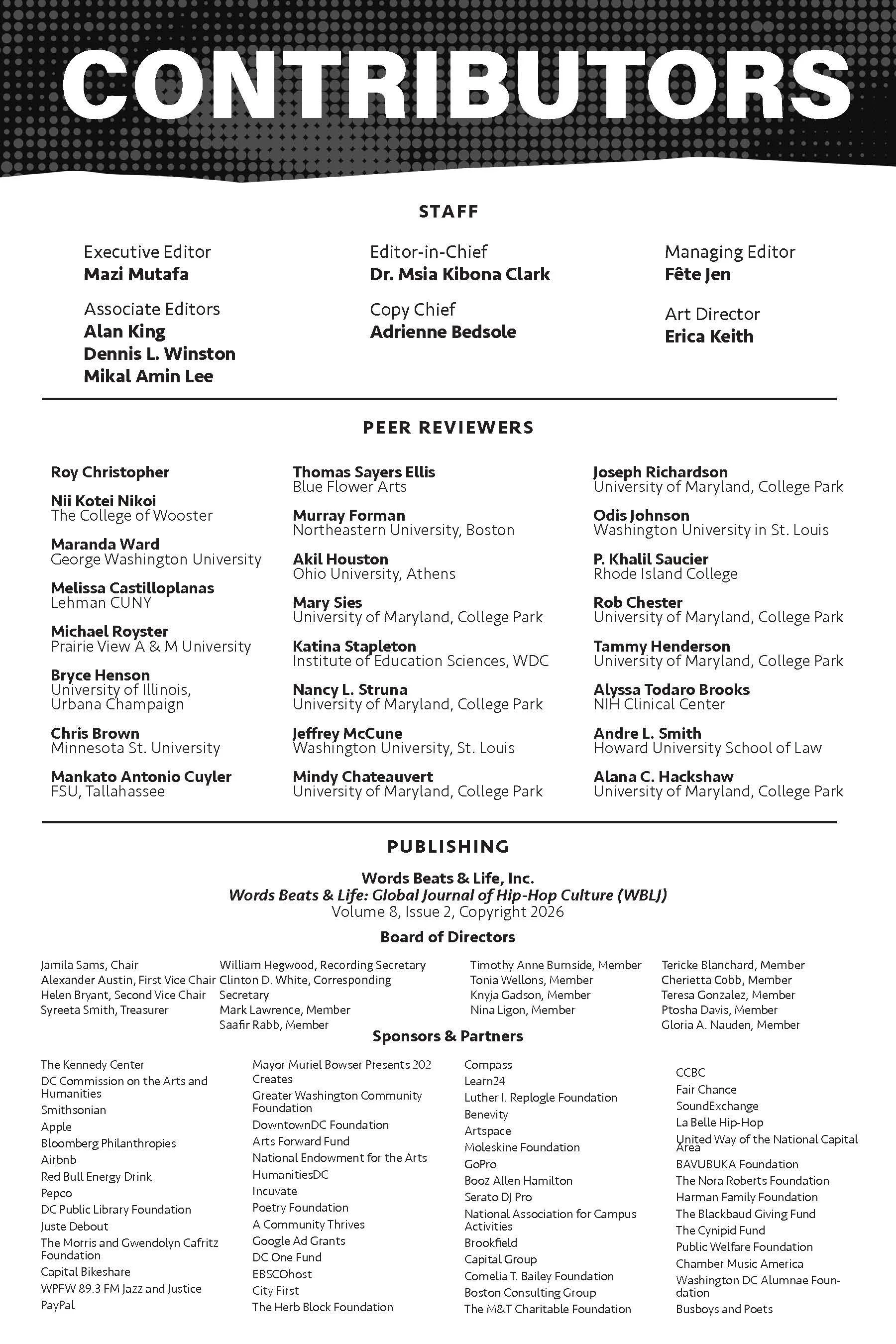
STAFF
Editor-in-Chief: Dr. Msia Kibona Clark
Executive Editor: Mazi Mutafa
Managing Editor: Fête Jen
Associate Editors
Alan King
Dennis L. Winston
Mikal Amin Lee
Copy Chief: Adrienne Bedsole
Art Director: Erica Keith
PUBLISHER: Words Beats & Life Inc.