The Sex Issue: Sex and Hip Hop Beyond Misogyny | Digital Journal Download


The Sex Issue: Sex and Hip Hop Beyond Misogyny | Digital Journal Download
The Sex Issue situates sexual expression in hip-hop within systems of capitalism, visual culture, and gender politics. By centering women, queer artists, and labor economies, the issue reframes sex in hip-hop as a complex negotiation of agency, power, and representation.
Publisher: Words Beats & Life Inc.
Publishing Date: 2012
Preview the Sex Issue:
Flip through the pages in this free digital preview.
Scholarly and Critical Contributions
Greg Thomas contributes theoretical work that situates sex within revolutionary and aesthetic frameworks.
Essays across the issue address queer hip-hop, sex work, pornography, strip club economies, and the politics of visibility, pushing hip-hop scholarship beyond respectability politics.
Poetry and Literary Contributors
Holly Bass, Tara Betts, and Kelly Zen-Yie Tsai contribute poetry that explores intimacy, gender, performance, and embodiment from Black feminist and diasporic perspectives.
These works position poetry as a counter-archive to academic discourse, centering lived experience alongside theory.
Visual Artists and Photographers
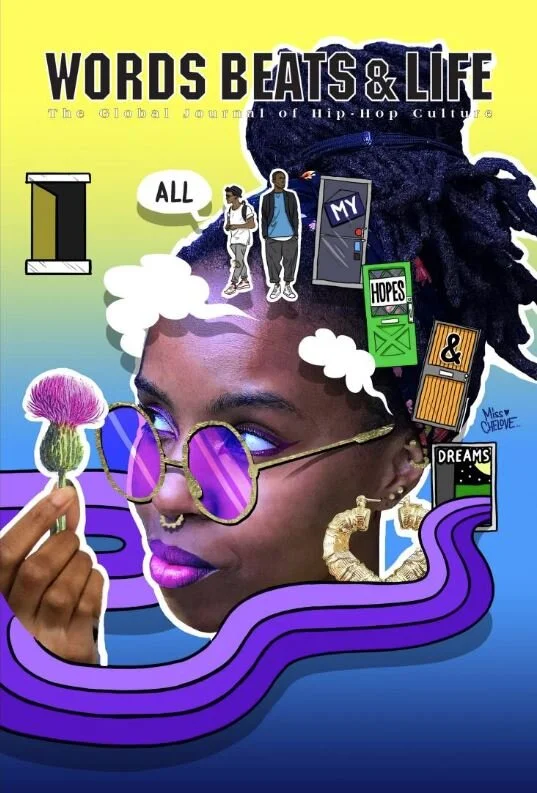
Cover art by Cita Sadeli (Chelove) depicts sex, design, and entrepreneurship within DC’s graffiti and visual arts lineage.
Elizabeth Blackford’s illustrations engage queer abjection, intimacy, and visual vulnerability.
Photography by Jati Lindsay and Rosina Teri Memolo documents hip-hop’s intimate spaces, clubs, and bodies with ethnographic care rather than spectacle.
Poster artist Emek contributes visual work connecting hip-hop to global graphic traditions.
Editorial and Peer Review Leadership
Edited by Jason Nichols, with a robust peer review board including Jared Ball, Kyra Gaunt, Joan Morgan, Gaye Theresa Johnson, and others, the issue reflects a rigorous interdisciplinary approach to sex, culture, and power.
Why This Issue Matters
The Sex Issue reframes sex in hip-hop as a field of negotiation rather than a moral failure. By centering women, queer artists, visual culture, and labor economics, the issue advances hip-hop studies into more nuanced, honest, and politically useful terrain.